Sonbhadra, designated as an Aspirational District, is home to a large tribal population that faces persistent barriers in accessing government welfare schemes due to geographic remoteness, limited awareness, and systemic exclusion. These communities, despite being legally entitled to various welfare benefits, remain largely disconnected from the social protection systems designed to support them.
Project SAHYOG directly addresses this gap by connecting 3,000 underserved individuals to relevant social protection schemes through community outreach, awareness generation, and on-ground facilitation. Field teams engage directly with remote tribal households, educating communities about their rights and available entitlements while actively supporting beneficiaries through documentation, enrollment, and follow-up processes. The project focuses on schemes related to food security, health, housing, livelihood, and social assistance.
Through this collaborative approach — bringing together civil society, philanthropy, and the corporate sector — SAHYOG aims to strengthen social security coverage, improve the well-being of vulnerable households, and contribute to the broader development goals of Sonbhadra district, ensuring that no community is left behind.
Project SAHYOG is implemented across 15 remote tribal villages in the Dudhi and Myorpur Tehsils of Sonbhadra District, Uttar Pradesh. These villages -including Amawar, Baghamandawa, Bagharu, Baheradol, Bairkhar, Berahawa, Dhanaura, Dighul, Dumar Diha, Dumara, Anjani, Anpara, Arangpani, Babhan Diha, Baliyari, Belawadah, Belhatthi, Bijpur, and Chanaga – are home to predominantly tribal communities including Gond, Baiga, and Kharwar, who face severe barriers in accessing government welfare schemes due to geographic isolation and limited administrative outreach.
The project focuses on the most vulnerable and underserved segments of the population, including Scheduled Tribe (ST) community members from Gond, Baiga, and Kharwar communities, women and female-headed households who are often the primary beneficiaries of social protection schemes yet face the greatest barriers in accessing them, elderly individuals who are entitled to pension and social assistance schemes but remain largely excluded, persons with disabilities who are eligible for government support but lack awareness and facilitation, and Below Poverty Line (BPL) families with limited literacy and documentation, making scheme enrollment particularly challenging.
Project SAHYOG directly targets 3,000 individuals from the most vulnerable tribal households in Dudhi and Myorpur Tehsils, Sonbhadra District – primarily from Gond, Baiga, and Kharwar communities, including women, elderly, persons with disabilities, and BPL families who remain excluded from government social protection schemes.
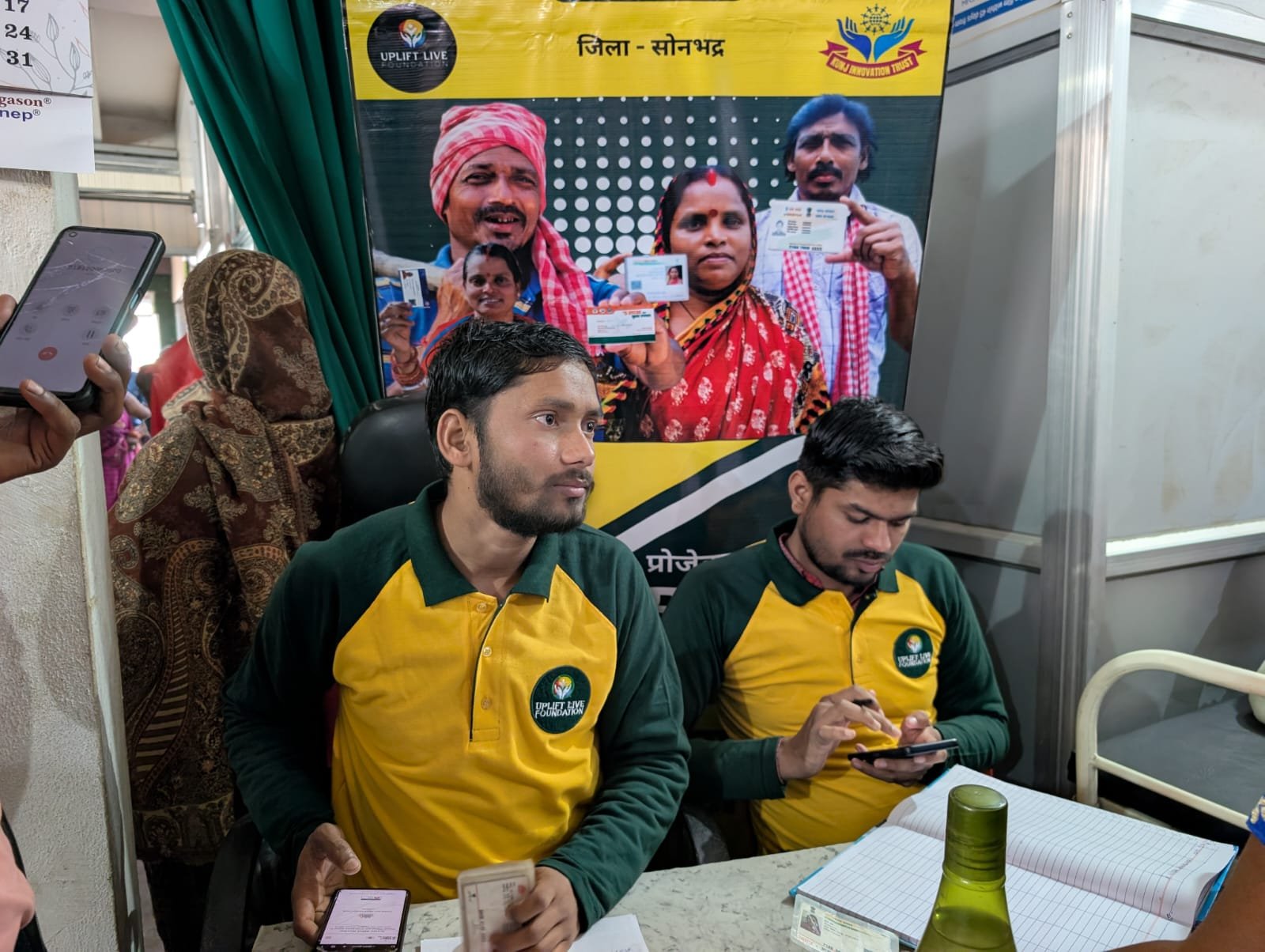
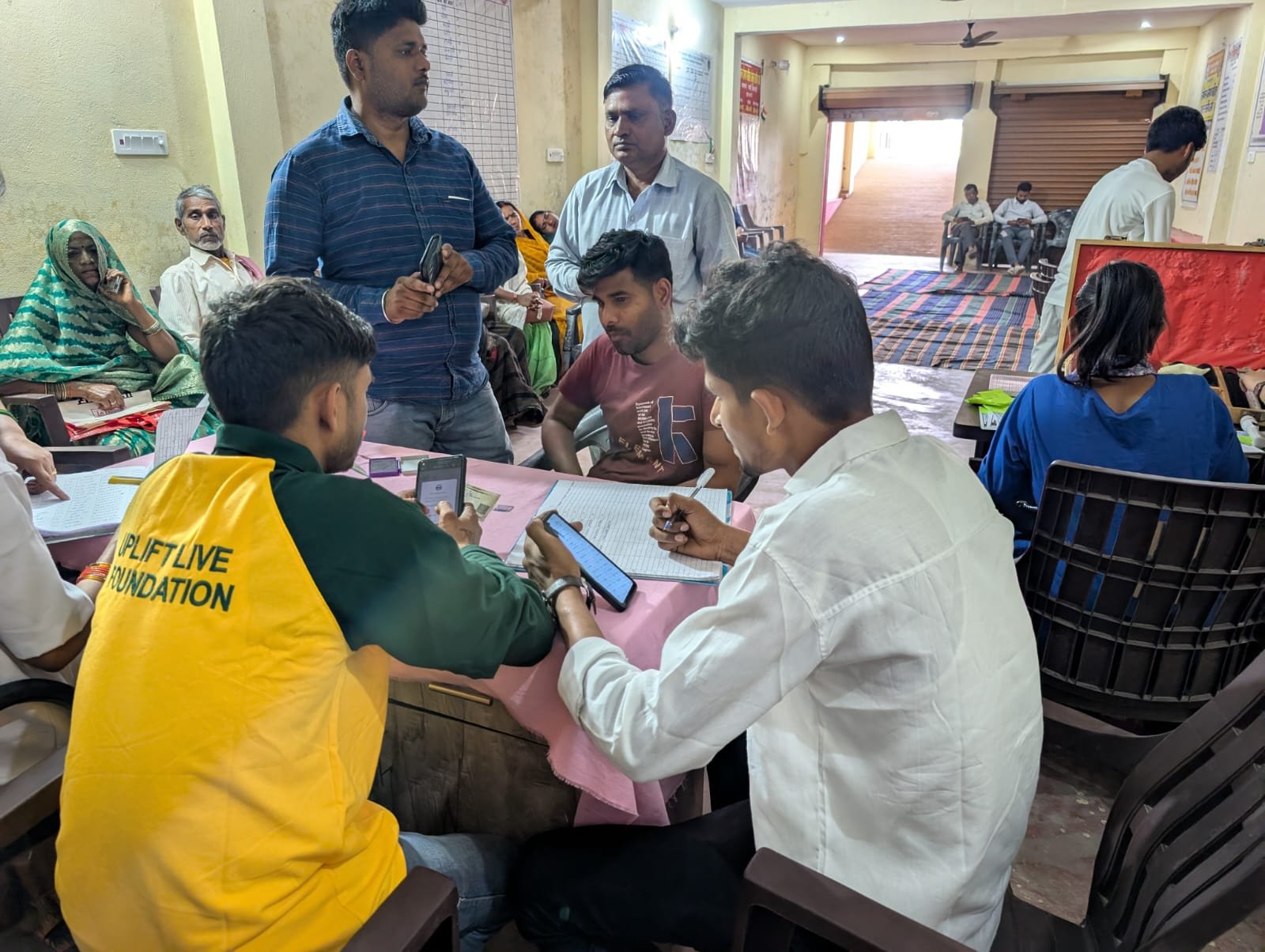
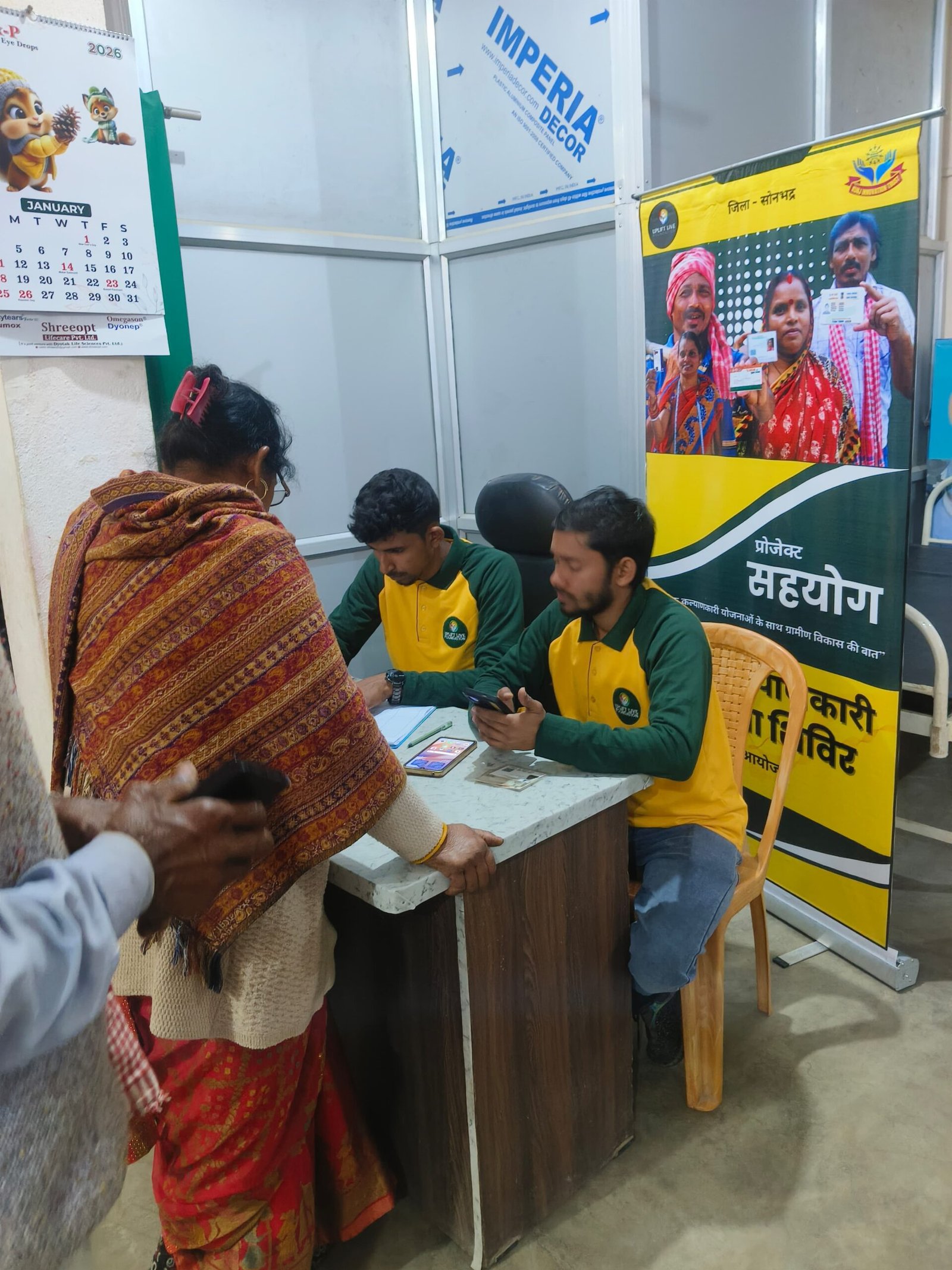
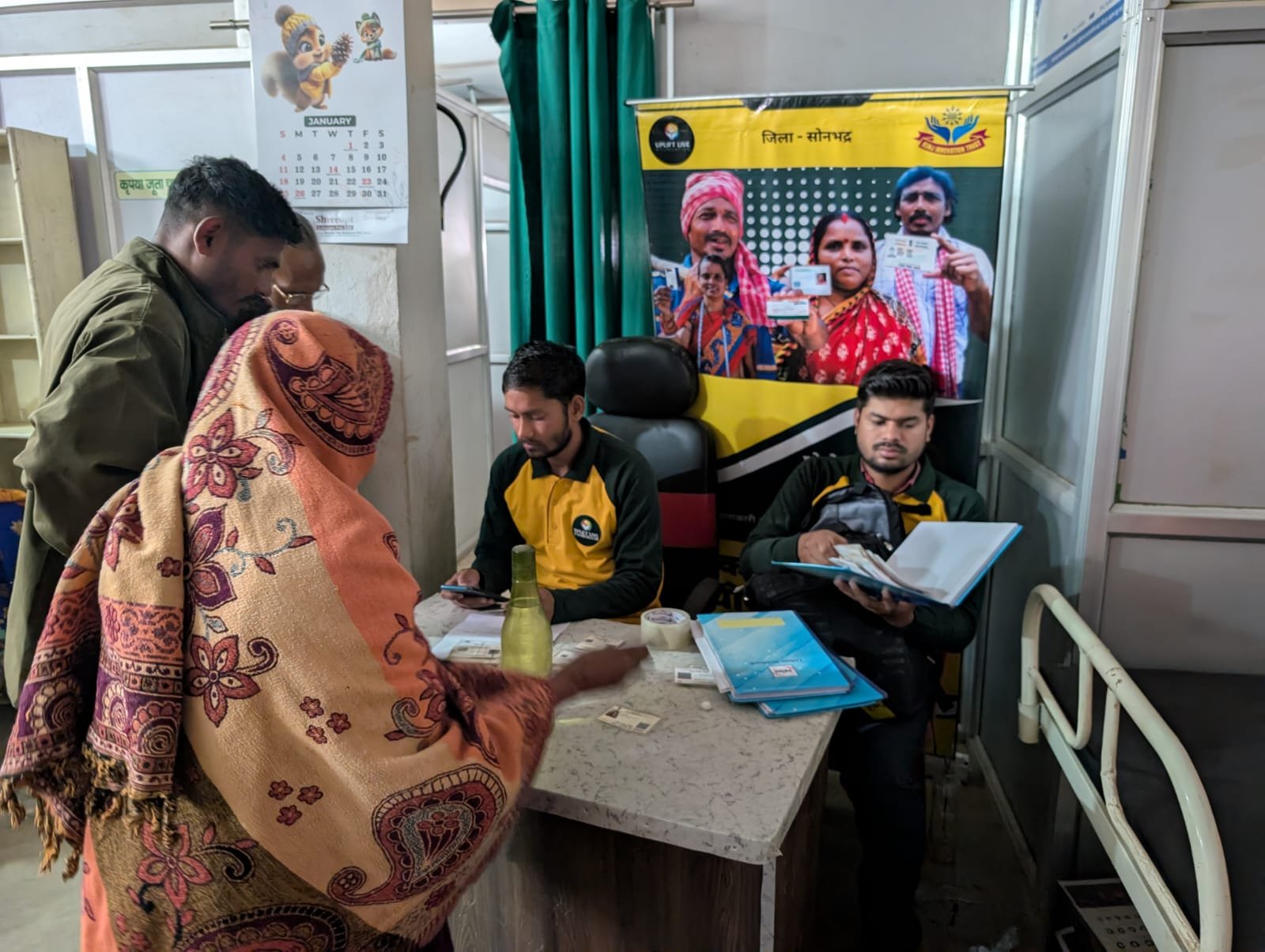
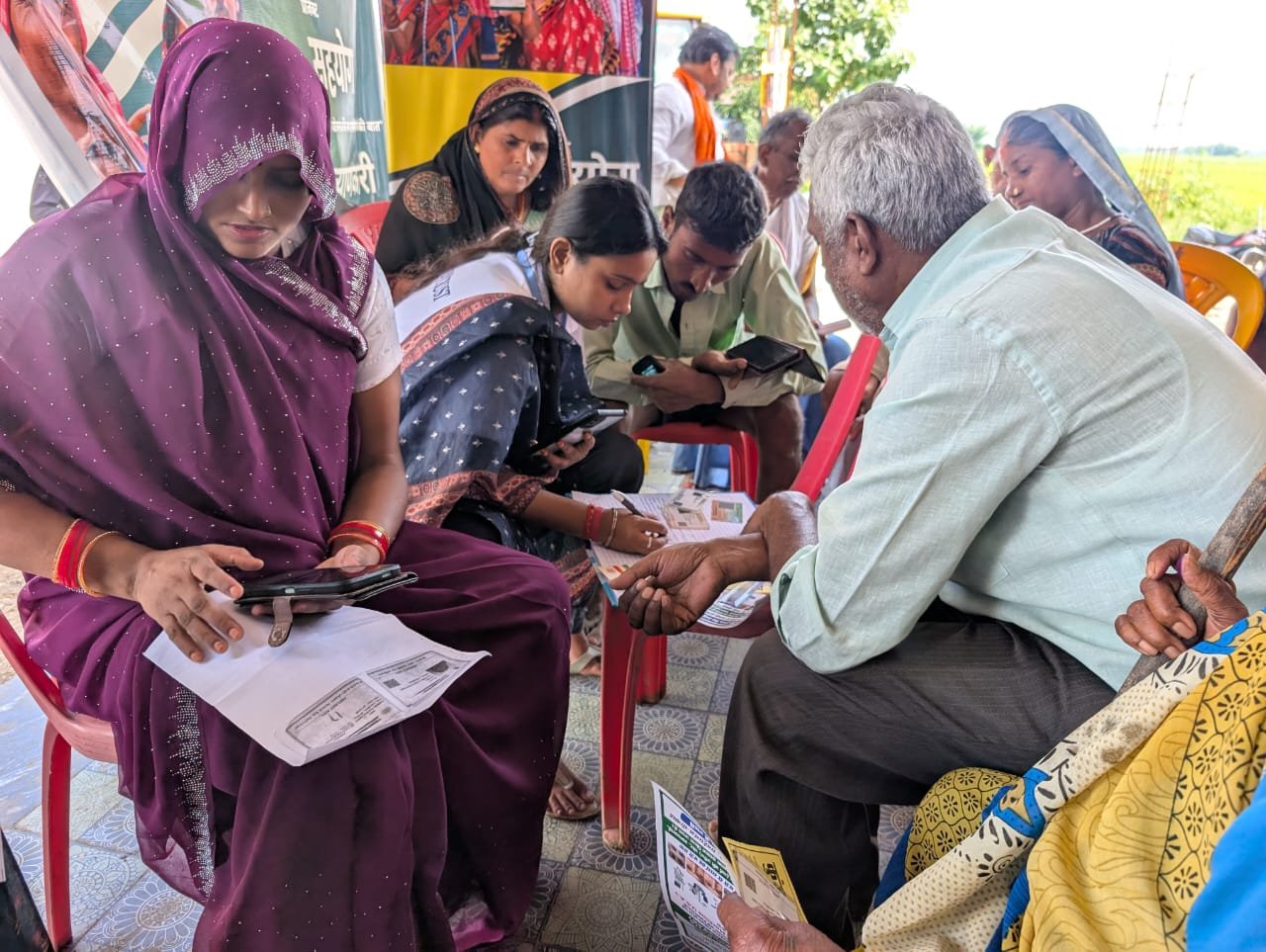
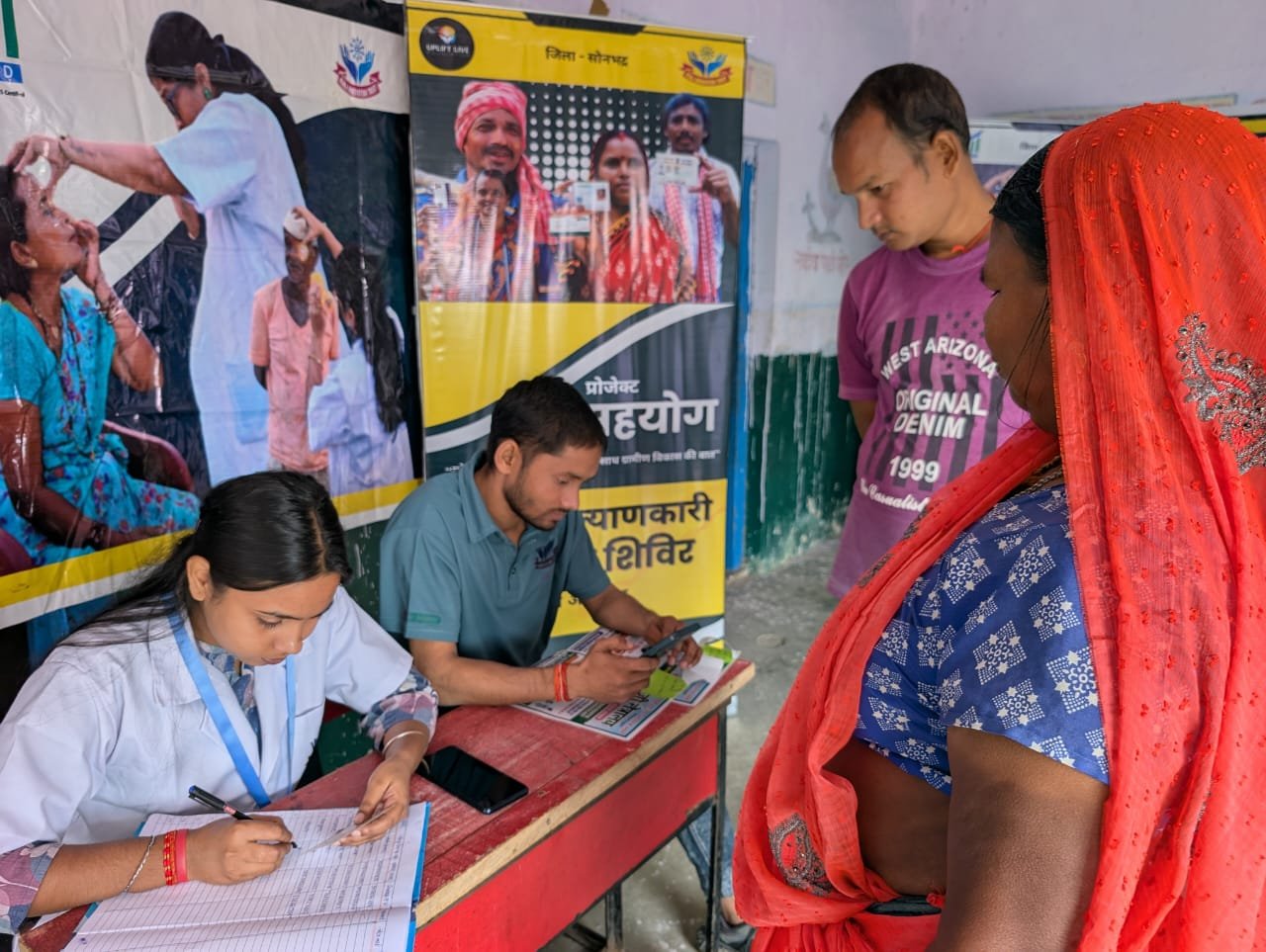
Rather than waiting for communities to navigate complex systems, Project SAHYOG reversed the model-bringing the process directly to the people across 15 remote tribal villages in Sonbhadra District.
Through two structured outreach camps per village, the Uplift field team conducted on-the-spot document verification, resolved long-standing documentation errors, and enrolled individuals into relevant social protection schemes matched to their socio-economic profile-covering financial assistance, livelihood support, health coverage, housing, and social security entitlements. Every enrollment was tracked through a real-time digital dashboard, ensuring full transparency and accountability.
What made SAHYOG truly effective was community ownership. Village residents mobilized their neighbors, built trust, and ensured that even the most hesitant families stepped forward. The Uplift team showed up with patience and purpose and the community showed up with them.
Structured community campaigns to educate citizens about available welfare schemes, their eligibility criteria, and the application process – in accessible, local language formats.
Dedicated ground teams assist individuals in identifying relevant schemes, completing applications, and navigating institutional processes – from enrolment to benefit receipt.
End-to-end assistance with document preparation and verification, removing the most common barrier preventing eligible citizens from accessing benefits they are entitled to.
A live beneficiary dashboard enables real-time tracking of enrolments, scheme linkages, and overall progress – ensuring transparency, accountability, and data-driven course correction.